The Future is Behind Us
ISSUE NO.3


We are living through a period of extraordinary technological acceleration. Emerging technologies, particularly artificial intelligence, are reshaping how we create, communicate, remember, and imagine. Yet the more powerful these systems become, the more urgently we find ourselves returning to older questions: What does it mean to make something? What is a culture, and who does it belong to? What can a machine know that a body cannot — and what can a body know that a machine never will?
The title of this issue is not a pessimist's statement. It is an invitation to look at time differently. The most generative responses to technological change have rarely come from looking forward alone; they have come from people who understood their inheritance deeply enough to know what was worth carrying. The ancestors already asked many of the questions we are only now learning to pose. The traditions, forms, and ways of knowing that pre-exist the algorithm are not relics — they are resources.
Issue Structure
Part I — The Intelligence We Inherited
Ancestral Knowledge, Living Tradition, and the Wisdom That Precedes the Machine
What forms of intelligence, knowledge, and meaning-making have humans cultivated across centuries and cultures — and what do they tell us about the moment we are in now?
Part II — How Things Remember
Material Culture, Embodied Knowledge, and the Memory Held in Objects, Places, and Bodies
Memory is not only cognitive. It lives in objects, in landscapes, in gestures, in craft. This section explores the kinds of knowing that reside in the material and embodied world — and what is at stake when cultural memory is mediated, archived, or trained on by machines.
Part III — Constellations
On Collaboration, Encounter, and the Patterns Formed When Different Worlds Meet
Creativity has always happened at the point of contact — between cultures, disciplines, traditions, and technologies. This section maps the collaborations, encounters, and creative relationships that emerge when different worlds come into orbit with one another.
Part IV — The Long Conversation
Transmission, Pedagogy, and the Forms Through Which Culture Crosses Time
How does culture survive? Through teaching, storytelling, ritual, and practice — forms of transmission that are fundamentally relational and deeply human. This section asks what it means to pass something on in an age when the means of transmission are being transformed.
Part V — What We Leave Behind
The Commons, Collective Imagination, and What We Owe to Those Who Come After
The issue closes with a question of responsibility. If the future is shaped by what we leave behind — what values, what structures, what creative commons — then what are we building, and for whom?
Contribute
Write for ARTIFACT
ARTIFACT No. 3 brings together essays, artists' reflections, and conversations. We welcome contributions that are rigorous without being inaccessible, personal without being insular, and culturally specific without losing sight of the broader questions the issue holds.
We are interested in work that resists easy answers. The best contributions will bring a distinct perspective — rooted in a particular practice, discipline, or cultural context — while speaking to readers who may not share that background. Work that earns its complexity rather than performing it.
Our readership includes scholars, policymakers, artists, and cultural practitioners, as well as professionals across technology, government, and public institutions, particularly in the UK, China, the United States, and the UAE.
Formats We believe the form should serve the idea. While we traditionally feature critical essays, reflective artist statements, and structured conversations, we invite you to propose the format that best brings your contribution to life — whether that is a visual portfolio with field notes, a manifesto, or a hybrid form that blurs these categories.
Text-based essays typically range from 1,500 to 3,000 words. Visual contributions often include up to 10 images with accompanying text. We view these as a starting point for conversation, not a constraint.
Tone Culturally insightful. Intellectually honest. Generous. Written for a reader who is curious and thoughtful, not necessarily academic. We ask contributors to write as if speaking to an intelligent person who has not spent their career in your field — and to trust that this makes the thinking sharper, not shallower.
→ We invite you to submit your proposal to team@artifactfutures.com
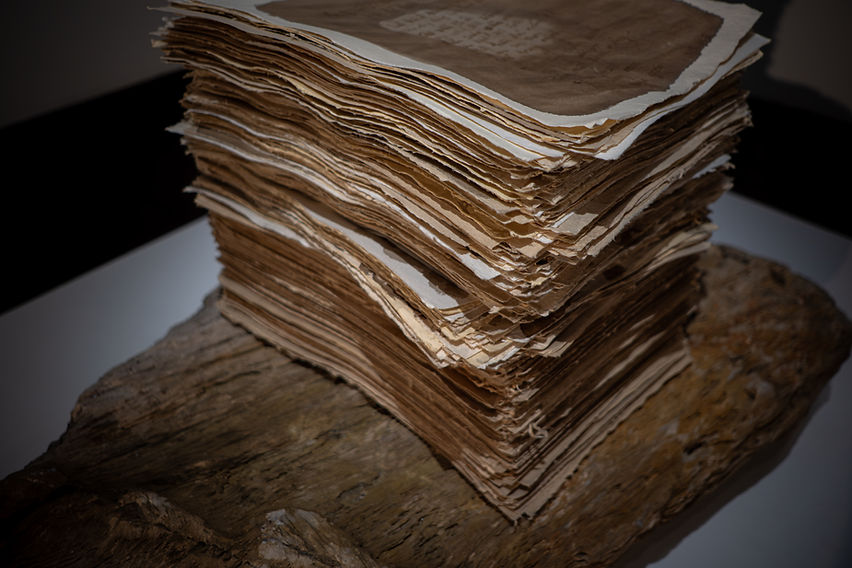

The Future Loop
ISSUE NO.2
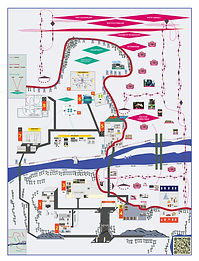
Country X -
Metaphysical
Cartography
for the Future
ISSUE NO.1
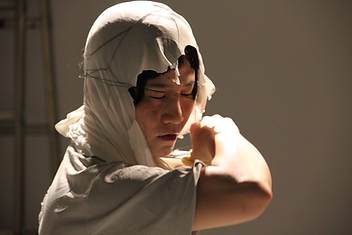
The Artist as Scientist: Resilience and Healing in Lai Dieu Ha's Practice
ISSUE NO.2

From Hanoi Train Factory to Venice Grid: In Conversation with Trung Mai about The Architectural Paradox of Ephemerality and Eternity
ISSUE NO.1

Seeing Beyond Systems: Representation, Identity, and Resistance - In Conversation with Diane Severin Nguyen About A New Way of Seeing
ISSUE NO.1
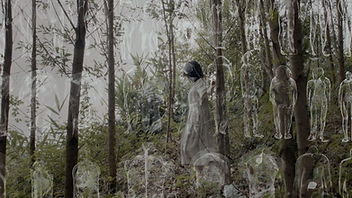
On Dream(machine, human), Q&A with Lêna Bùi
ISSUE NO.2
The Future is Behind Us
ISSUE NO.3